


Fabric is never just fabric. It is woven memory. It is resistance stitched into seams. It is celebration dyed so richly it refuses to fade. During Black History Month, we honor the many ways Black communities have told their stories through cloth, craft, and creativity. Lean in close and listen to what textiles are saying.

Stitching Survival and Strength
Quilting traditions in African American communities evolved into powerful forms of storytelling. The celebrated quilts of Gee’s Bend, crafted by generations of Black women in rural Alabama, transformed scraps into bold geometric masterpieces. Their work now hangs in major museums, not as relics, but as living art that redefined modern design. Textiles became testimony. Every patch held a story. Every stitch marked time.
Today’s Story Tellers and Artists
The tradition of using textiles to tell stories and maintain tradition is very much alive today. Here are a few modern textile artists and their stories:
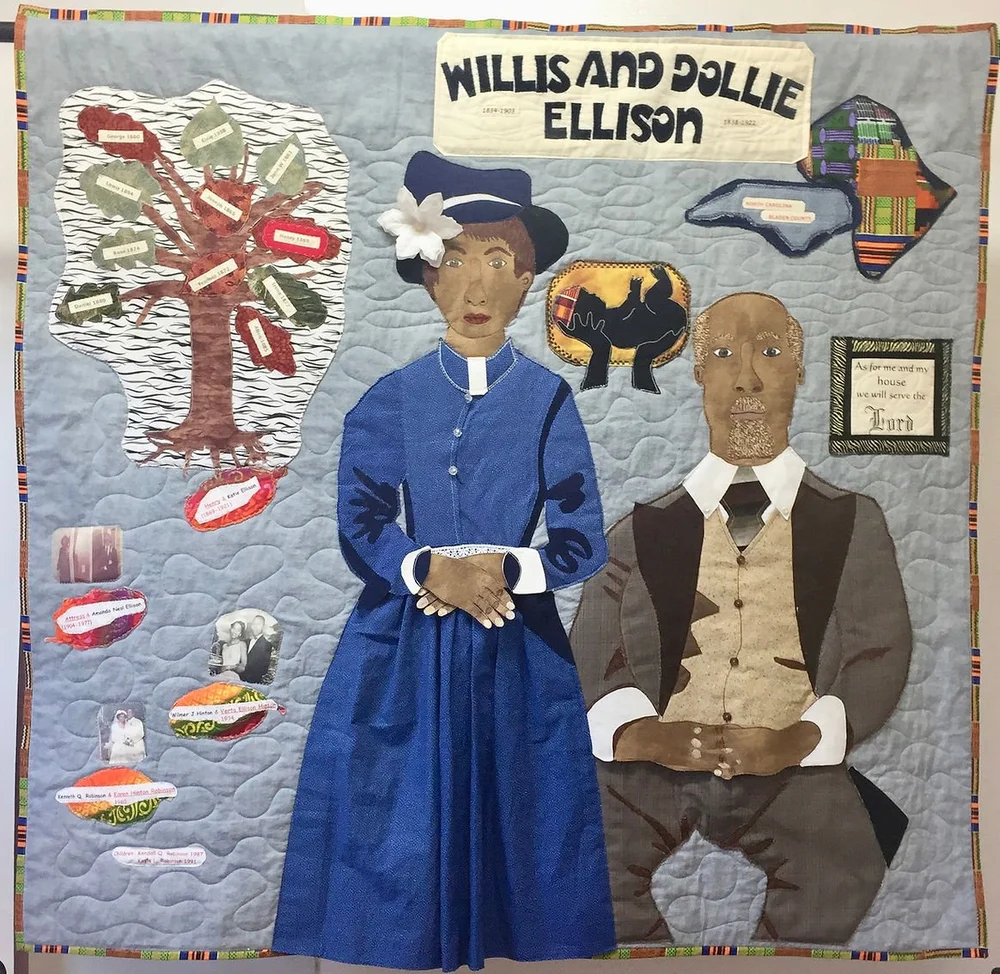
Karen Hinton Robinson, Memory Quilts by Karen
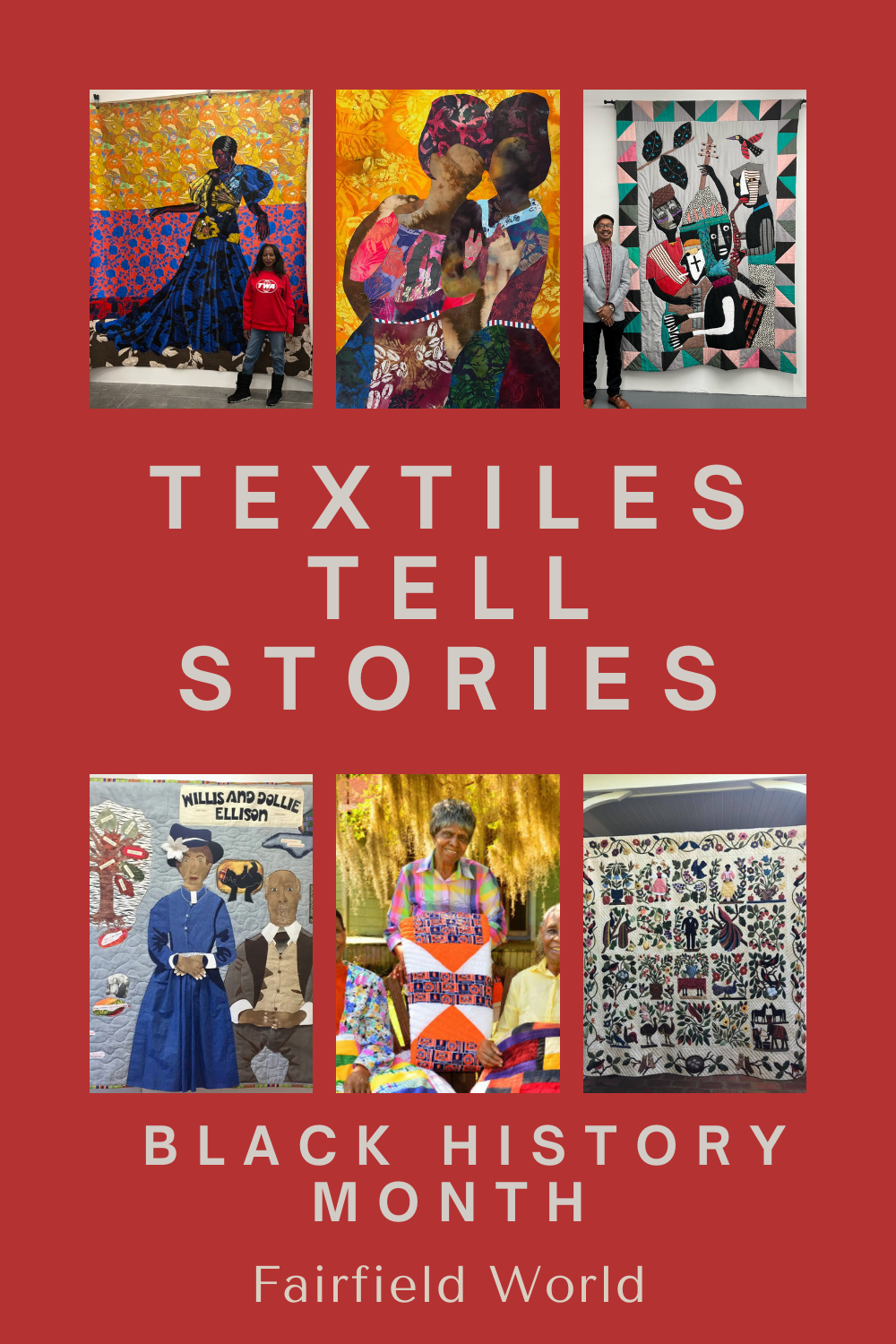
Air Force Veteran Karen Hinton Robinson started quilting as a hobby, and it evolved into her second career. Her work encapsulates both stories of the past and celebrations of today. Her first Black History Quilt is one she still uses as a teaching tool, and her quilts have been displayed at several cultural centers and festivals. She is the co-founder of the African American Quilt Circle of San Antonio, which created a quilt exhibit for the San Antonio Tricentennial celebration. Her art quilt called “My Ancestors, Willis and Dollie Ellison” is a beautiful example of how fabric is used to preserve a memory and tell a story.
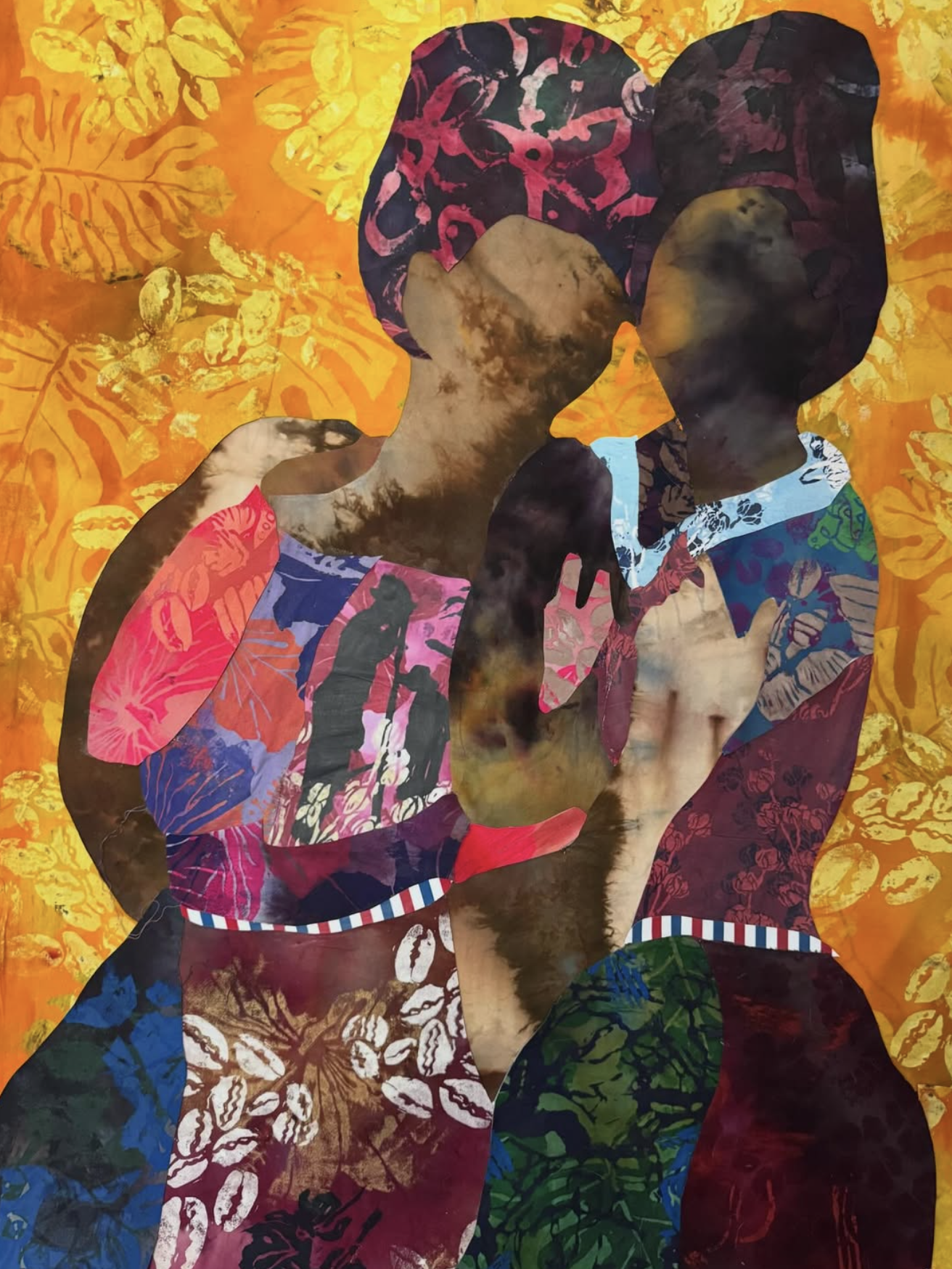
Zsudayka Nzinga
Zsudayka is a contemporary Fine Artist and Art Educator who works with hand dyed fabric to create collaged tapestries. She recently posted that “for the last two years I’ve been researching symbols and how an image or object can communicate a specific cultural or historical experience. These hand dyed and printed fabrics serve as the narrative to the figures in my work. Focusing on Black American history, my work uses fashion and figure to tell the underlying stories of our existence.” This piece, called “The Sisters”, is one of her three new works currently on display in DC.
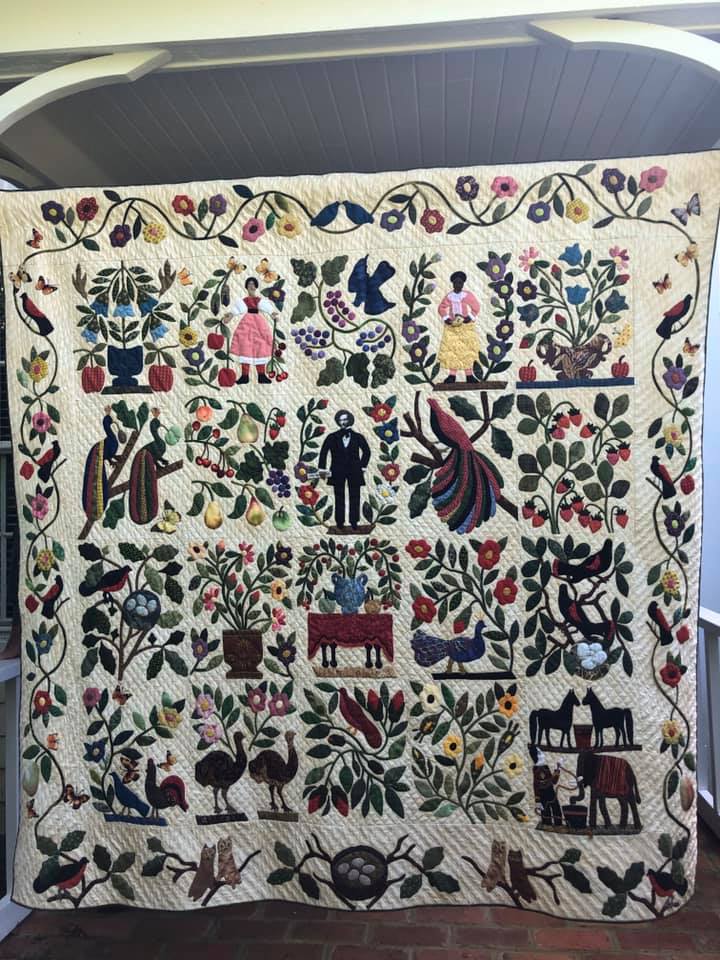
Vera Hall
A former educator and activist, Vera P. Hall has been a textile artist for more than 50 years. After retirement she began to explore the Baltimore album quilt style, which is an appliqué method that was popular in the mid 1800s in Maryland. Her recent quilts mesh her historical research with her craft. Some of her recent works include quilts that tell the stories of African Americans during the Civil War, as well as quilts that tell the stories of notable historical figures. This example, called “Illustrious Ancestors”, tells the story of Frederick Douglas’ connection to the Baltimore Shipyards.
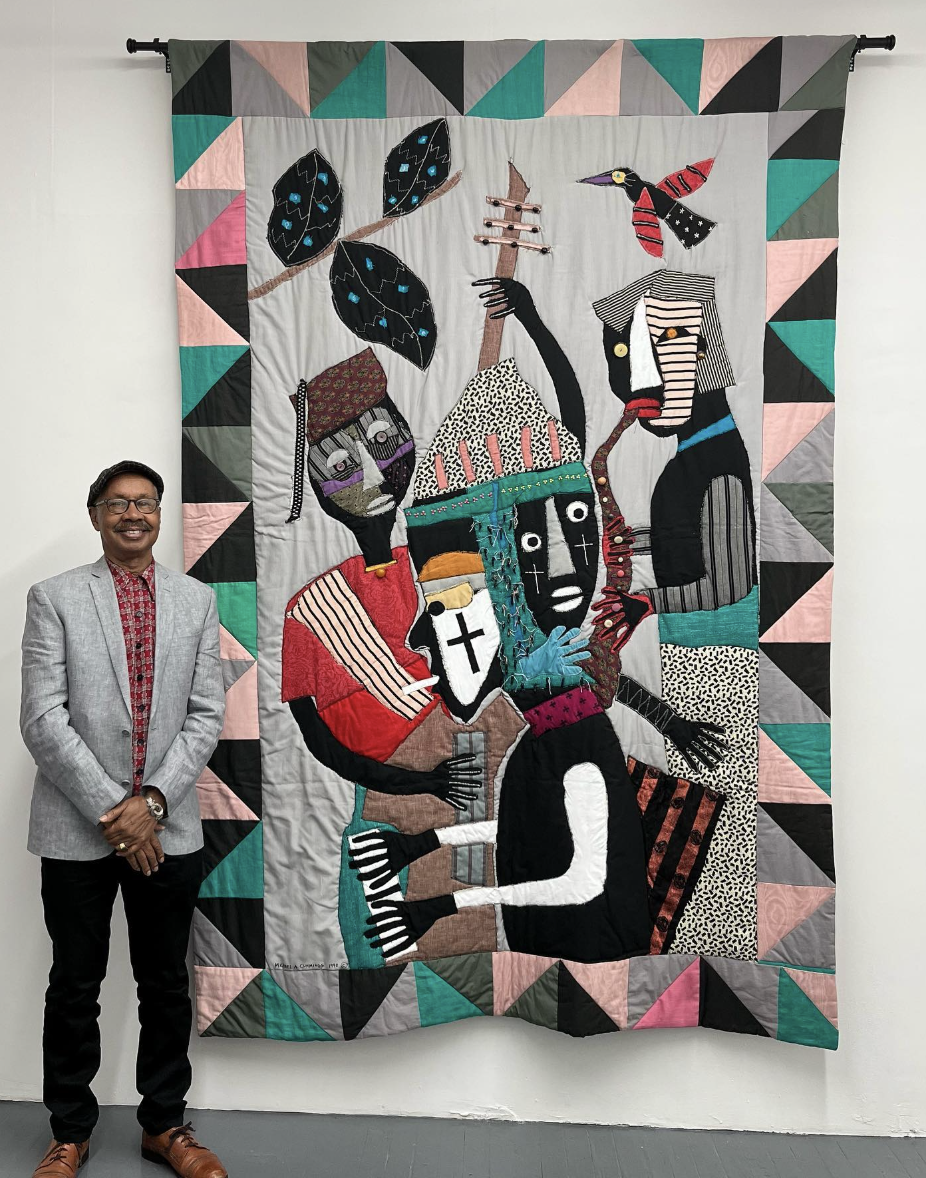
Michael A. Cummings
One of only a few men nationally recognized for quiltmaking, Michael Cummings uses reclaimed African fabrics with various techniques to explore what it means to be a Black artist. He uses appliqué and patchwork techniques, often embellished with hand embroidery and found objects, to create works of fabric art. His love of jazz music is often evident in his work, as seen in this quilt called “African Jazz”.

Bisa Butler
Stunningly talented, Bisa Butler recently stated that we are touched by fabric from the moment we are born, and fabric is around us all the time for our entire lives, making it an integral part of our existence and the perfect medium for her art. She is credited with creating a new genre of quilting that she uses to create life size portraits in fabric. Her work blends photographs with traditional textiles to create pieces that celebrate Black life and identity. Her work is in permanent collections such as the Smithsonian and exhibited widely. One of her newest pieces is called “Red, Black and Blue”, based on a 1938 photo of a young lady in her home.
Craft as Community
Craft invites collaboration. It asks us to sit together, share stories, and pass skills from one generation to the next. To explore textiles is to explore resilience, creativity, and cultural continuity. It is to recognize that art can be armor, language, celebration, and revolution all at once. This Black History Month, let’s look closely at what we wear, what we make, and what we pass down. Somewhere in those threads, a story is waiting to be told.