April Fool’s Day is all about tricks, but the real joke would be letting your craft supplies outwit you. Lumpy stuffing? Batting that won’t behave? A drawer full of tangled foam scraps? Not on our watch. Today we’re pulling back the curtain on the sneakiest sewing room struggles and giving you the smart, no-nonsense solutions for sewing problems to outsmart them once and for all. No pranks. Just fixes.
FIX #1: Taming the Stuffing Storage Chaos
Polyester fiberfill is the escape artist of the craft room. It puffs up, explodes open, and sheds everywhere. The trick it pulls on you? Making you think there’s no good way to store it.
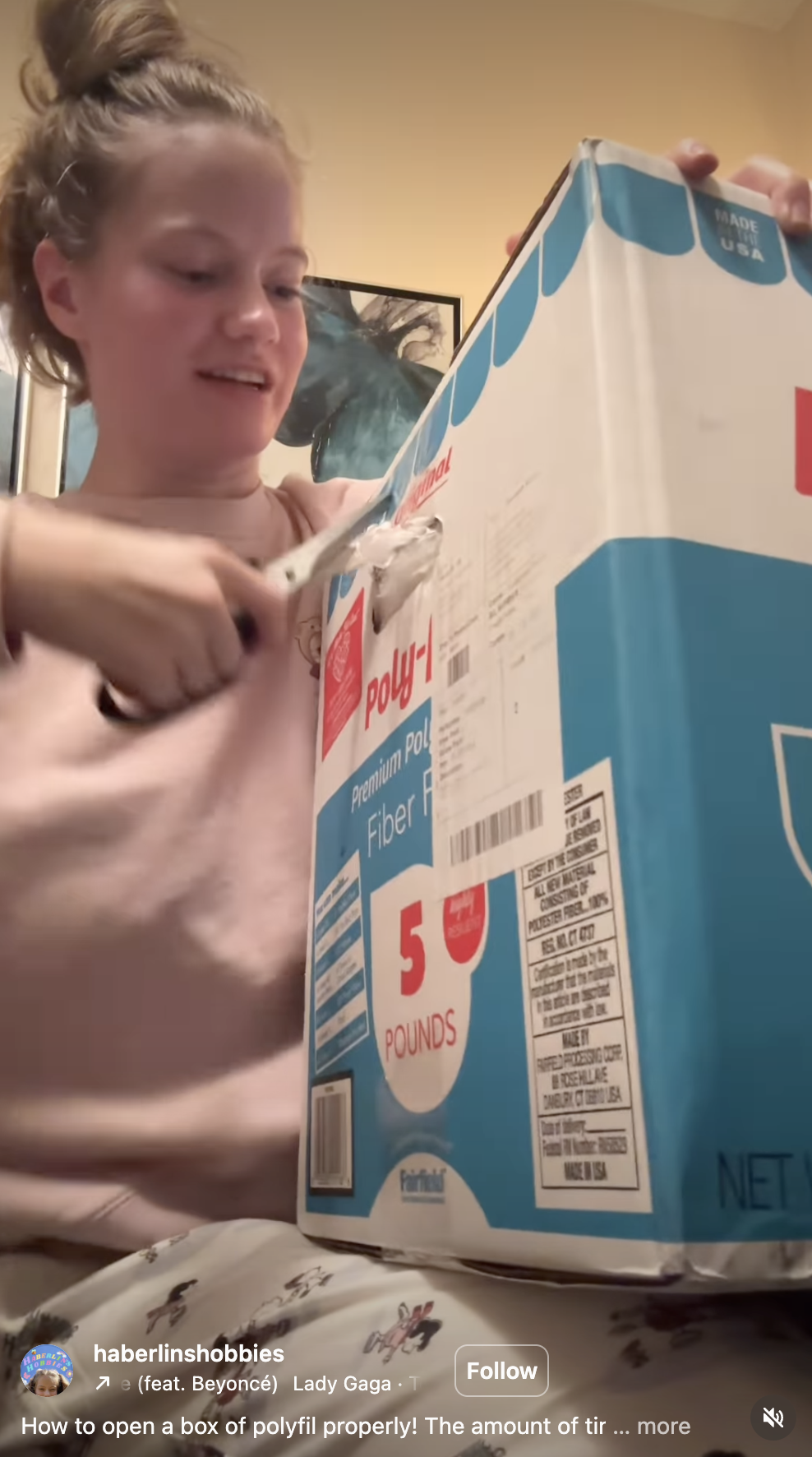
The fix: Cut a hole in the box! The 5, 10, and 20 pound boxes of Poly-Fil Fiber Fill are the perfect storage solution when you use a scissors to cut a hole in the box, then pull the fiber fill out by the handful. This video clip from Haberlin’s Hobbies illustrates how easy this trick is! For those who prefer to buy the bags of Poly-Fil Fiber Fill, a clear lidded storage bin works beautifully. Stack bags inside and you’ll have an organized, grab-ready system that would make any maker smile.
FIX #2: Batting That Behaves in Storage
Batting has a sneaky habit: fold it once and it will remember those creases forever. Unfurl a folded batt before a quilt project and you’re fighting stubborn lines that can wreak havoc while sewing your finished piece.
The fix: Store batting rolled, not folded. Roll pieces loosely around a cardboard tube (a wrapping paper tube is perfect), then slip into a large plastic sleeve or fabric bag. This preserves loft, eliminates fold lines, and keeps your batting project-ready. For cut pieces or batting scraps, sort by size and store in labeled flat bins or shallow drawers. Small scraps of Fairfield’s batting are worth keeping because they’re perfect for small projects, stuffing accents, or layering inside potholders. The Patchwork Posse has rounded up several other solutions to help you find ways to store your batting.

FIX #3: Avoiding the Lumpy Stuffing Curse
Nothing deflates the joy of a completed project like lumps and bumps under the fabric surface. This is the trick stuffing loves to play, looking fine going in, then clumping into little balls that peek through.
The fix: Use high quality fillers like Poly-Fil® Premium Fiber Fill, which is specially engineered not to clump or migrate. Its high-quality fibers stay evenly distributed wash after wash. Add fiberfill to your projects in small, pulled-apart tufts rather than large clumps. “Tease” the fill by pulling it apart with your fingers before inserting, which breaks up the fibers and allows them to interlock smoothly. Fill tightly-shaped areas (ears, noses, tails) first using a stuffing tool or chopstick, then work toward the larger body cavity.
FIX #4: Which Glues Actually Work with Oly-Fun™?
Oly-Fun’s unique composition means not all adhesives play nice with it. Using the wrong glue is the April Fool’s joke that wrecks a finished project, like peeling edges or a bond that fails after one use.
The fix: Hot glue is the top choice for most Oly-Fun projects. It bonds quickly, holds firmly, and is ideal for 3D construction, attaching embellishments, and securing seams that won’t be laundered. Use a low-temperature glue gun to avoid warping the fabric. Fabric glue (permanent, flexible formulas) like Beacon’s Fabri-Tac works well for flat applications and layering.

FIX #5: How to Cut Foam Like a Pro
Foam is the prankster of the cutting table. Press your scissors or blade in, and it compresses — meaning your cut wanders and edges end up jagged, uneven, or angled. The trick is understanding that foam needs to be cut, not compressed.
The fix:
- For thin to medium foam (up to 1 inch): Use a sharp rotary cutter and a firm cutting mat. Apply light, steady pressure in a single smooth pass, and don’t saw back and forth. Replace rotary blades frequently, as foam dulls them fast.
- For thick foam (1 inch and above): An electric carving knife (the kind used for Thanksgiving turkey) is the hands-down best tool. Long, serrated, powered blades glide through foam with zero compression. Cut slowly and let the blade do the work. An electric foam cutter (hot wire) is another excellent option for precise shapes.
No Fooling — These Solutions for Sewing Problems Work.
April Fool’s Day belongs to pranksters. Your sewing room belongs to you. With the right techniques and Fairfield World products in your corner, every project comes out looking exactly like it should — no tricks required. Do you have solutions for sewing room problems to share? Drop it in the comments below. We’d love to hear your fix!